
History-Periods
Past eras

From pre-history to today
Choose your period

Pre history - Present
explore the different eras
Past eras
Choose your period
explore the different eras
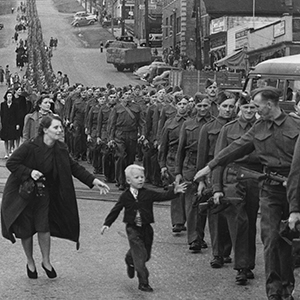
As the international situation became increasingly tense in the lead-up to World War II, there were growing concerns about the actions of Nazi Germany and Imperial Japan in British Columbia and the rest of Canada.
The rise of fascist and militaristic regimes in Europe and Asia, as well as their aggressive expansionist policies, were seen as a threat to peace and stability in the world. There was also a growing fear of espionage and sabotage by agents of these regimes within Canada, particularly given the large German and Japanese communities in British Columbia.
Additionally, the Canadian government and many Canadians were deeply concerned about the human rights abuses and atrocities being committed by Nazi Germany and Imperial Japan, particularly the persecution of Jews and other minority groups in Europe and the treatment of occupied territories in Asia.
As a result of these concerns, the Canadian government began to take steps to prepare for the possibility of war, including increasing military spending and strengthening national defense. There was also a growing sense of public support for the Allied war effort, and many Canadians, including those in British Columbia, joined the military or contributed to the war effort in other ways.
efore World War II, the military defenses in British Columbia and in Canada in general were relatively limited. The Canadian government had traditionally focused on maintaining a small, professional standing army, with the majority of military resources and personnel concentrated on the east coast. As a result, the military presence in British Columbia was relatively small, with a few coastal defense batteries and a small number of troops stationed in the province.
In addition, the Royal Canadian Navy had a limited number of ships and the Royal Canadian Air Force had a small number of aircrafts and airfields, and the overall military budget was low.
As the international situation worsened leading to WWII, the Canadian government began to take steps to strengthen its military defenses, including increasing military spending and expanding the size of the armed forces. However, it was still underfunded and under-equipped compared to other nations, and it was not yet ready to face a major war.
In British Columbia, the government began to construct coastal defenses such as fortifications and anti-aircraft batteries, and also increased the number of troops stationed in the province. However, these efforts were hindered by lack of resources, and the military defenses in the province remained relatively weak.
Overall, before World War II, the military defenses in British Columbia and in Canada in general were relatively limited and underfunded, and the country was not yet ready to face a major war.
Timeline
Before World War II, British Columbia was a largely rural and resource-based economy, with the main industries being logging, fishing, and mining. The population of the province was relatively small, with the majority of people living in coastal communities or in the lower mainland around Vancouver. The population was also relatively diverse, with significant Chinese and Japanese communities in the province, as well as Indigenous peoples.
Culturally, British Columbia was heavily influenced by British and European settlers, and there was a strong sense of "Britishness" in the province. However, there were also vibrant Chinese, Japanese, and Indigenous cultures present.
Social conditions in the province were generally quite good, with a relatively high standard of living, but there were also significant disparities between different groups of people. Indigenous peoples, for example, faced significant social and economic challenges, including poverty and discrimination. Chinese and Japanese immigrants also faced discrimination and racism, particularly in the form of laws and regulations that restricted their rights and
opportunities.
Overall, while British Columbia was a relatively prosperous and peaceful place before World War II
British Columbiahistory.ca is a visitor supported web site. If you would like to submit an article or opinion, please visit our blog at www.blog.British Columbiahistory.ca.
Reference: Article by (Staff Historian), 2023
Tel: 1 604 833-9488
Email: info@canadahistorysociety.ca

All content and images are protected by copyright to Access History