
History-Periods
Past eras

From pre-history to today
Choose your period

Pre history - Present
explore the different eras
Past eras
Choose your period
explore the different eras
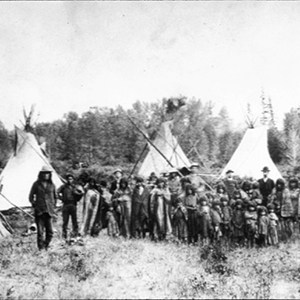
The Kutenai (also known as Ktunaxa or Kootenai) indigenous people are a First Nations people who traditionally lived in what is now southeastern British Columbia, northern Idaho, and western Montana. They have long been known for their fishing, hunting, and gathering skills, as well as their horse culture. The Kutenai people had a complex social and political organization, with a strong emphasis on family and community. They had a matrilineal kinship system and were divided into several different bands or tribes. Religion and spirituality played an important role in Kutenai culture, with a belief in a creator god and various supernatural beings.
The Kutenai people have lived in this region for thousands of years, and their history and culture are deeply connected to the land and its resources.
Archeological evidence suggests that people have been living in the region for at least 12,000 years. However, due to the lack of written records, the exact timing of the Kutenai people's arrival in the area is not known. Some linguistic and genetic studies suggest that the Kutenai people may have originated from Asia and migrated to North America via the Bering land bridge, but more research is needed to confirm this theory.
The Kutenai people were traditionally known for their fishing, hunting, and gathering skills. They relied heavily on the resources of the Columbia River and its tributaries, as well as the surrounding forests and mountains, for their food supply.
Fishing was a significant source of food for the Kutenai people. They fished for salmon, steelhead, trout, and sturgeon using a variety of techniques, including fishing with nets and spears, and using fish traps. They also harvested other aquatic species such as lampreys, eels, and whitefish.
Hunting was another important source of food for the Kutenai people. They hunted a variety of big and small game such as deer, elk, bighorn sheep, mountain goat, moose, black bear, and beaver. They also hunted birds such as ducks, geese, and swans.
Gathering was also important for the Kutenai people. They gathered a variety of wild fruits, berries, nuts, and roots. They also gathered medicinal plants, and other plants used for weaving baskets, and making clothing.
Additionally, the Kutenai people had a strong horse culture, and they used horses for hunting and transportation. They also ate horse meat, and used the hides for clothing and shelter.
The Kutenai people had a complex relationship with other indigenous peoples in the region. They had both friendly and hostile interactions with neighboring tribes, depending on the historical context and the specific circumstances.
The Kutenai people had a long history of trading with other tribes, particularly the Salish, Flathead, and Nez Perce peoples. They traded goods such as furs, horses, and dried fish for items such as roots, berries, and woven goods. This trading network was essential for the Kutenai people, as it allowed them to access resources that were not readily available in their own territory.
The Kutenai people also had a history of intermarriage with neighboring tribes, which helped to strengthen alliances and maintain peaceful relations.
However, the Kutenai people also had conflicts with other tribes, particularly the Blackfoot, Cree and Shoshone, over hunting and fishing rights, territory and resources. These conflicts often involved raiding and warfare, but also were resolved through peace treaties and diplomatic relations.
It's important to note that the relationship between the Kutenai people and other indigenous peoples was complex and multifaceted, and was shaped by a variety of factors such as geographical proximity, resource availability, and historical context.
The Kutenai people traditionally spoke the Kutenai language, also known as Ktunaxa or Kootenai. The Kutenai language is a language isolate, meaning that it does not belong to any known language family. It is unique and not closely related to any other language spoken in North America or elsewhere.
The Kutenai language has several dialects, which vary by region and by tribe. It is a complex language, with a rich vocabulary, grammatical structure, and a unique sound system. The Kutenai language has a complex system of vowel and consonant sounds, as well as pitch and stress accents.
Currently, the Kutenai language is considered endangered, with only a small number of fluent speakers remaining. Efforts are being made to revitalize the language, through language classes, immersion programs, and language documentation projects.
It's important to note that many Kutenai people also spoke other languages such as Chinook Jargon, and Cree.
Timeline
The Kutenai people had a complex and dynamic society. They were divided into several different bands or tribes, each with their own distinct culture and traditions. However, there were also many shared cultural elements that united the Kutenai people as a whole.
The Kutenai people had a matrilineal kinship system, meaning that descent and inheritance were traced through the mother's line. This system was reflected in their social and political organization, with women playing important roles in the community. Women had significant authority in the selection of leaders, and the ownership of property and resources was passed down through the female line.
The Kutenai people also had a strong emphasis on family and community. They lived in small villages or camps, which were organized around extended family units. Families were responsible for providing for their own needs, but also shared resources and labor with others in the community.
Religion and spirituality played an important role in Kutenai culture. They believed in a creator god, as well as various supernatural beings, such as spirits of animals, plants, and natural phenomena. They also believed in an afterlife and held ceremonies and rituals to honor the dead and communicate with the spirit world.
Kutenai people were skilled at hunting, fishing, and gathering and were a semi-nomadic people, who had a strong connection to the land and its resources. They also had a strong horse culture, using horses for hunting and transportation. They also used the hides for clothing and shelter.
British Columbiahistory.ca is a visitor supported web site. If you would like to submit an article or opinion, please visit our blog at www.blog.British Columbiahistory.ca.
Reference: Article by (Staff Historian), 2023
Tel: 1 604 833-9488
Email: info@canadahistorysociety.ca

All content and images are protected by copyright to Access History