
History-Periods
Past eras

From pre-history to today
Choose your period

Pre history - Present
explore the different eras
Past eras
Choose your period
explore the different eras
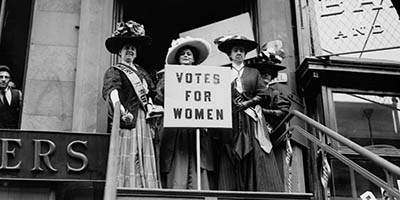
The women in British Columbia were granted the right to vote in 1917 due to increasing pressure from the suffrage movement and changing social attitudes towards women's role in society. During World War I, many women took on important roles in the workforce and demonstrated their capability and competence, which helped to break down gender stereotypes and contributed to the push for women's suffrage. Additionally, suffragettes and suffragists organized protests and lobbying efforts to draw attention to their cause and push for change.
The right to vote for women in British Columbia was granted by the federal government of Canada. In 1917, the Canadian Parliament passed the Wartime Elections Act, which granted the franchise to women who were "British subjects" over the age of 21 and were relatives of servicemen or servicewomen. This act applied to all of Canada, including British Columbia. In 1918, the franchise was extended to all women over 21, regardless of their relationship to servicemen, through the Representation of the People Act.
The franchise granted to women in 1917 applied to both federal and provincial elections in British Columbia and throughout Canada. The Wartime Elections Act and the Representation of the People Act both granted women the right to vote in all elections, including federal, provincial, and municipal elections.
There was a suffrage movement in British Columbia. Women in British Columbia, as well as across Canada, were actively involved in the fight for suffrage, and there were several suffrage organizations and campaigns in the province. These organizations and campaigns worked to raise awareness about the importance of women's suffrage and to push for change. Through activism, lobbying, and public demonstrations, the suffragettes of British Columbia helped to build momentum for the broader suffrage movement and played a significant role in securing the right to vote for women in 1917.
There were several prominent suffragettes in British Columbia who played important roles in the women's suffrage movement. Some of the notable figures include Nellie McClung, Irene Parlby, Henrietta Muir Edwards, and Emily Murphy. These women were leaders of the suffrage movement in British Columbia and across Canada, and they used their voices and platforms to advocate for women's rights and push for change.
The push for women's suffrage in British Columbia was influenced by several factors, including the First World War. During the war, many women took on important roles in the workforce, as men were away fighting, and this demonstrated their competence and capability. This helped to break down gender stereotypes and contributed to the growing movement for women's rights, including the right to vote.
Additionally, the war created a sense of urgency and galvanized support for women's suffrage, as many suffragettes argued that women's contributions to the war effort deserved to be recognized through the franchise. The government of Canada recognized this and passed the Wartime Elections Act in 1917, which granted the right to vote to women who were "British subjects" over 21 years of age and were relatives of servicemen or servicewomen. This act applied to all of Canada, including British Columbia.
Timeline
The opinions of the people of British Columbia towards women's suffrage and the franchise varied. There were some who supported women's right to vote and believed that it was a matter of justice and equality. These individuals saw women's suffrage as an important step forward in the broader movement for women's rights and equality, and they recognized the valuable contributions that women had made to society, both during the First World War and beyond.
However, there were also those who opposed women's suffrage and believed that women were not capable of participating in the political process. These individuals held onto traditional gender roles and believed that women's place was in the home, not in the political arena.
Overall, the suffrage movement in British Columbia and the granting of the franchise to women in 1917 was met with both support and opposition. However, the efforts of the suffragettes and the changing social and political climate helped to bring about the franchise for women and to advance the broader movement for women's rights and equality.
British Columbiahistory.ca is a visitor supported web site. If you would like to submit an article or opinion, please visit our blog at www.blog.British Columbiahistory.ca.
Reference: Article by (Staff Historian), 2023
Tel: 1 604 833-9488
Email: info@canadahistorysociety.ca

All content and images are protected by copyright to Access History