
History-Periods
Past eras

From pre-history to today
Choose your period

Pre history - Present
explore the different eras
Past eras
Choose your period
explore the different eras
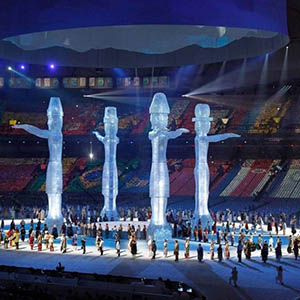
The 2010 Vancouver Olympics were the 21st Winter Olympic Games held in Vancouver, Canada, from February 12 to February 28, 2010. The games featured 86 events in 15 sports, including skiing, snowboarding, figure skating, and ice hockey. A total of 2,566 athletes from 82 countries competed in the games. The games were a great success, with many memorable moments, including the Canadian men's hockey team winning the gold medal in a dramatic final against the United States.
Vancouver won the bid to host the 2010 Winter Olympics in 2003, after competing against several other cities, including Pyeongchang (South Korea), Salzburg (Austria), and Bern (Switzerland). The bid was based on the city's strong commitment to sustainability, as well as its well-established reputation as a destination for winter sports and its infrastructure that could support the games. The city's proposal emphasized the use of existing facilities, the creation of new, energy-efficient venues, and the development of a comprehensive transportation plan that would minimize the environmental impact of the games. These factors, along with Vancouver's strong cultural and natural attractions, made it an appealing choice for the International Olympic Committee (IOC).
The 2010 Vancouver Olympics were organized and managed by several different entities. The International Olympic Committee (IOC) was responsible for overseeing the organization and management of the games, as well as for setting the rules and regulations for the competition. The Vancouver Organizing Committee for the 2010 Olympic and Paralympic Winter Games (VANOC) was the local organizing body responsible for planning, organizing, and executing the games. This included responsibilities such as venue construction and operations, transportation, security, and athlete services. In addition, various government agencies, including the federal, provincial, and municipal governments, were involved in various aspects of the games, such as funding, security, and transportation. The collaboration between these different entities was crucial in the successful delivery of the 2010 Vancouver Olympics.
John Furlong was the CEO of the Vancouver Organizing Committee for the 2010 Olympic and Paralympic Winter Games (VANOC), which was responsible for the planning, organization, and execution of the 2010 Vancouver Olympics. Furlong was a key figure in the successful delivery of the games and was credited with bringing together a talented and dedicated team of professionals who worked to ensure the games were a great success. Prior to his role at VANOC, Furlong had a long career in sports management, including executive positions with organizations such as the Canadian Olympic Committee and the Canadian National Sports Centre. He was widely recognized for his contributions to the Olympic movement and received several awards and honors for his work.
The 2010 Vancouver Olympics took place from February 12 to February 28, 2010, and lasted for 17 days.
The events of the 2010 Vancouver Olympics were held in several different locations in the greater Vancouver area and in Whistler, British Columbia.
In Vancouver, events took place at venues such as BC Place Stadium, which was used for the opening and closing ceremonies, as well as the medal presentations, and the Pacific Coliseum, which hosted figure skating and short track speed skating.
In Whistler, events were held at several different venues, including the Whistler Sliding Centre, which hosted bobsleigh, luge, and skeleton competitions, and the Whistler Olympic Park, which was used for cross-country skiing, biathlon, and ski jumping events.
Overall, the 2010 Vancouver Olympics featured 17 competition and non-competition venues, including outdoor and indoor venues, spread across two cities and in the surrounding mountains.
The 2010 Vancouver Olympics were filled with many memorable moments and highlights. Some of the most notable highlights from the games include:
The opening ceremony, which showcased Canada's rich cultural heritage and diverse communities, and was watched by millions of people around the world.
The Canadian men's hockey team winning the gold medal in a dramatic final against the United States, bringing the country together in celebration.
The performance of Canadian figure skater Joannie Rochette, who won the bronze medal just days after the sudden death of her mother.
The stunning scenery and natural beauty of the venues in Vancouver and Whistler, which provided a breathtaking backdrop for the competitions.
The thrilling competitions in skiing, snowboarding, and ice hockey, which provided many nail-biting moments and unexpected results.
The outstanding performances of athletes from around the world, including American skier Lindsey Vonn, who won two gold medals, and Germany's biathlete Magdalena Neuner, who won three gold medals.
The men's gold medal hockey game at the 2010 Vancouver Olympics was a highly anticipated and unforgettable moment in the history of the games. The game was played on February 28, 2010, and pitted the Canadian men's hockey team against the United States.
The game was held at Rogers Arena in Vancouver and was watched by millions of people around the world. The atmosphere was electric, with fans from both countries filling the arena and creating a loud and raucous atmosphere.
The game was tightly contested, with both teams playing with great intensity and determination. The first period ended in a scoreless tie, but Canada took the lead early in the second period with a goal from Jonathan Toews. The United States battled back, tying the game in the third period with a goal from Ryan Kesler.
The game went into overtime, with the gold medal hanging in the balance. In the final minutes of the extra period, Canadian forward Sidney Crosby scored the winning goal, securing the gold medal for Canada.
The Canadian team was celebrated as heroes across the country, and the gold medal was seen as a source of national pride. The game is remembered as one of the greatest moments in Canadian hockey history and is a testament to the skill and determination of the Canadian athletes who competed in the 2010 Vancouver Olympics.
Jon Montgomery, was famously seen drinking beer while walking through Whistler Village after winning a gold medal at the 2010 Vancouver Olympics. Montgomery won the gold medal in the men's singles luge competition and became a popular figure at the games due to his celebratory behavior and his friendly and approachable personality. His celebratory beer walk through Whistler Village was captured by photographers and became one of the iconic images of the 2010 Vancouver Olympics, and helped to create a memorable and festive atmosphere at the games.
Timeline
The 2010 Vancouver Olympics had a significant impact on the people of Vancouver and the surrounding areas. Some of the most notable impacts include:
Boost to the local economy: The games brought thousands of visitors to the city, and the increased tourism and spending had a positive impact on the local economy.
Improved infrastructure: The city of Vancouver underwent extensive renovations and upgrades in preparation for the games, including improvements to transportation systems, hotels, and sports venues. These improvements have had lasting benefits for the city and its residents.
Increased national pride: The games provided an opportunity for Canadians to come together and celebrate their country and their athletes. The success of the Canadian team, particularly in the men's gold medal hockey game, helped to create a sense of national pride and unity.
Improved international image: The 2010 Vancouver Olympics helped to improve Canada's international image and reputation, showcasing the country's natural beauty, cultural diversity, and friendly people to a global audience.
Legacy for sports and recreation: The games have left a lasting legacy in the form of new sports facilities and infrastructure, including the Richmond Olympic Oval and Whistler Olympic Park, which have become valuable resources for the local community and have helped to promote sports and recreation in the region.
British Columbiahistory.ca is a visitor supported web site. If you would like to submit an article or opinion, please visit our blog at www.blog.British Columbiahistory.ca.
Reference: Article by (Staff Historian), 2023
Tel: 1 604 833-9488
Email: info@canadahistorysociety.ca

All content and images are protected by copyright to Access History