
History-Periods
Past eras

From pre-history to today
Choose your period

Pre history - Present
explore the different eras
Past eras
Choose your period
explore the different eras
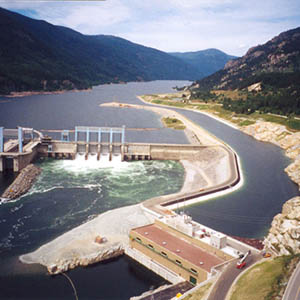
The Columbia River Treaty is a water treaty signed in 1961 between the United States and Canada. It governs the regulation and management of the Columbia River system, which spans both countries, to provide flood control and hydroelectric power. The treaty resulted in the construction of several large dams in Canada and the U.S., and established a cooperative framework for sharing the benefits and costs of the Columbia River system. The treaty was ratified in 1964 and remains in effect, although there have been recent efforts to renegotiate its provisions.
British Columbia was not a direct party to the Columbia River Treaty, signed in 1961 between the United States and Canada. However, British Columbia played a significant role in the negotiation and implementation of the treaty as the Canadian province through which a significant portion of the Columbia River flows. The treaty resulted in the construction of several large dams in British Columbia, including the Duncan Dam and the Mica Dam, which provided flood control and hydroelectric power generation for the province. As a result of the treaty, British Columbia receives annual payments from the Canadian government for the electricity generated by these dams. In recent years, there have been efforts to renegotiate the provisions of the treaty that impact British Columbia.
W.A.C. Bennett, the Premier of British Columbia from 1952 to 1972, played a key role in using the Columbia River Treaty to secure benefits for the province. Bennett was a strong advocate for British Columbia's interests in the negotiations leading up to the signing of the treaty in 1961. He ensured that the treaty provided significant benefits to the province, including payments for the electricity generated by the hydroelectric dams constructed in British Columbia as a result of the treaty, and ensured that the province's water resources were protected.
Bennett also used the revenues from the treaty to support the development of the province's infrastructure and to fund public services, such as healthcare and education. By leveraging the benefits of the Columbia River Treaty, Bennett was able to provide economic stability and growth for British Columbia and position the province as a leader in the development of hydroelectric power. Through his leadership and advocacy, Bennett was able to secure lasting benefits for British Columbia through the Columbia River Treaty.
Timeline
The Columbia River Treaty had both positive and negative effects on the people of British Columbia. On the positive side, the treaty led to the construction of several large hydroelectric dams in the province, which provided a source of clean energy and helped to support the growth of British Columbia's economy. The treaty also resulted in annual payments to the province from the Canadian government, which were used to fund public services and infrastructure projects.
However, the construction of the hydroelectric dams had significant impacts on the local communities and indigenous peoples who lived along the Columbia River. Many people were displaced from their traditional lands and livelihoods, and the construction of the dams had a profound impact on the natural environment and ecosystems of the region. Additionally, the treaty resulted in the loss of fishing and hunting opportunities for indigenous peoples, and had other cultural impacts that are still felt today.
Overall, the effects of the Columbia River Treaty on the people of British Columbia were complex and varied, with both positive and negative impacts. While the treaty helped to support the growth of the province's economy and infrastructure, it also had significant impacts on the local communities and indigenous peoples of the region.
British Columbiahistory.ca is a visitor supported web site. If you would like to submit an article or opinion, please visit our blog at www.blog.British Columbiahistory.ca.
Reference: Article by (Staff Historian), 2023
Tel: 1 604 833-9488
Email: info@canadahistorysociety.ca

All content and images are protected by copyright to Access History