
History-Periods
Past eras

From pre-history to today
Choose your period

Pre history - Present
explore the different eras
Past eras
Choose your period
explore the different eras
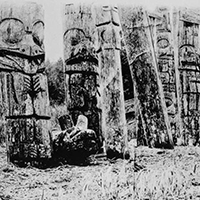
In 1862, an outbreak of smallpox occurred in British Columbia, Canada. The disease, which is caused by the variola virus, was introduced to the area by European settlers and quickly spread among the indigenous populations. The outbreak was particularly devastating for the Kwakwaka'wakw, Nuu-chah-nulth, and Coast Salish peoples, who had no immunity to the disease. Many communities were decimated, with some losing over half of their population. The outbreak also had a significant impact on the fur trade and other economic activities in the region. The BC government in its later years took steps to control the outbreak by quarantining ships and people coming in and out of the colony.
Victoria, the capital of British Columbia, was one of the areas affected by the smallpox outbreak in 1862. The city was a hub for trade and commerce, and the disease was likely introduced to the area through the arrival of infected individuals by ship. The outbreak had a significant impact on the city, with many residents falling ill and dying. The exact number of deaths in Victoria is not known, but it is likely that the death toll was high. The outbreak also had a detrimental effect on the local economy, as trade and other activities were disrupted. The government in Victoria took steps to control the outbreak, such as quarantining ships and people coming in and out of the colony, but the disease spread quickly and had a severe impact on the native population.
The 1862 outbreak of smallpox in British Columbia, Canada was particularly severe because it affected a population that had no immunity to the disease. The indigenous peoples of British Columbia had not been exposed to smallpox before, and therefore had no natural immunity to the virus. This made them particularly vulnerable to the disease, and the outbreak quickly spread among the population, causing widespread illness and death.
Additionally, the outbreak occurred during a time when there were few effective means of controlling the spread of the disease. The vaccine for smallpox had been developed in the late 18th century, but it was not widely available or well-known in British Columbia at the time of the outbreak. The quarantine measures and other public health interventions that are commonly used today to control the spread of infectious diseases were not yet in place in British Columbia in 1862, so the outbreak was not effectively contained.
This outbreak was part of a series of epidemics that affected the indigenous population in North America during the 18th and 19th centuries, these epidemics were a major factor in the decline of the population.
The smallpox outbreak was one of several epidemics that affected indigenous peoples in North America during the 18th and 19th centuries, and contributed to the decline of their population.
Timeline
Smallpox was a highly contagious and widespread disease that affected people all over the world. Prior to the development of a vaccine in the 18th century, smallpox was responsible for major epidemics and pandemics that caused significant illness and death.
It is estimated that smallpox killed hundreds of millions of people throughout human history, with some estimates putting the number as high as 500 million. The disease was particularly deadly in populations that had no immunity to it, such as indigenous peoples in the Americas, Australia and Africa, who were devastated by smallpox epidemics when Europeans first arrived in these regions.
After the development of a vaccine by Edward Jenner in 1796, smallpox vaccination campaigns were conducted in many countries, and the disease was eventually declared eradicated in 1980 by the World Health Organization (WHO).
British Columbiahistory.ca is a visitor supported web site. If you would like to submit an article or opinion, please visit our blog at www.blog.British Columbiahistory.ca.
Reference: Article by (Staff Historian), 2023
Tel: 1 604 833-9488
Email: info@canadahistorysociety.ca

All content and images are protected by copyright to Access History