
History-Periods
Past eras

From pre-history to today
Choose your period

Pre history - Present
explore the different eras
Past eras
Choose your period
explore the different eras
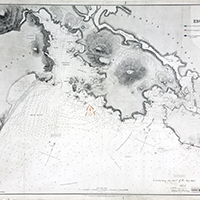
Esquimalt is a municipality located on the southern tip of Vancouver Island in British Columbia, Canada. The area has a rich history dating back to the Indigenous peoples who have lived there for thousands of years. The name "Esquimalt" comes from the Indigenous language, meaning "place of gradually shoaling water."
the base was established in 1842, as a result of the Oregon Boundary Dispute between Britain and the United States. The base was chosen as a strategic location to protect British interests in the Pacific Northwest and as a counter to the American naval base at Puget Sound. The Royal Navy's presence in Esquimalt helped to assert British sovereignty over the region and played a key role in the resolution of the boundary dispute.
The Royal Navy constructed a number of ships and facilities to support its operations. These included:
A dry dock: The Royal Navy's first dry dock on the west coast of North America was built in Esquimalt in 1860. The dry dock was used to repair and maintain the Royal Navy's ships operating in the Pacific.
A naval hospital: A naval hospital was built in Esquimalt in 1887 to provide medical care for the sailors and officers of the Royal Navy.
Naval barracks: A number of barracks were built in Esquimalt to house the sailors and officers of the Royal Navy. These barracks were later used to house Canadian sailors and officers after the Royal Canadian Navy was established in 1910.
Ships: A number of ships were based at the Esquimalt naval base, including the HMS Sparrowhawk, which was the first British warship to be stationed on the west coast of North America and was used to assert British sovereignty in the region. Other ships that were based at the naval base include the HMS Grappler, HMS Hecate and HMS Sparrowhawk.
In addition to these facilities, the Royal Navy also established a number of shore-based facilities to support the operation of its ships, such as fuel and ammunition depots, and workshops.
The base was also the home of the Pacific Squadron, and later the Pacific Fleet, of the Royal Navy, which was responsible for the defense of British interests in the Pacific region.
As the home base of the Pacific Squadron of the Royal Navy, the Esquimalt naval base played a significant role in the defense of British interests in the Pacific region. Some notable events that occurred while the base was the home of the Pacific Squadron include:
The Oregon Boundary Dispute: The Pacific Squadron played a key role in asserting British sovereignty over the region during the Oregon Boundary Dispute between Britain and the United States in the 1840s. The base was established in 1842 as a result of this dispute.
The Pig War: The Pacific Squadron was involved in the Pig War, a boundary dispute between the United States and Great Britain over the San Juan Islands in 1859. The Pacific Squadron was responsible for maintaining the British presence in the area and preventing any escalation of the conflict.
The Fraser River Gold Rush: The Pacific Squadron played a role in maintaining order during the Fraser River Gold Rush of 1858. The Royal Navy was responsible for preventing any conflict between American and British miners.
The Klondike Gold Rush: The Pacific Squadron was involved in maintaining order during the Klondike Gold Rush of 1897. The Royal Navy helped to prevent any conflict between American and British miners and enforced Canadian sovereignty in the area.
The Boxer Rebellion: The Pacific Squadron was involved in the Boxer Rebellion in China in 1900, sending ships to assist in the international relief force.
The First World War: The Pacific Squadron played a role in the defense of the British Empire during the First World War, with ships based at Esquimalt being involved in patrols and convoy escort duties in the Pacific.
Overall, during the time of Pacific Squadron, the Esquimalt naval base served as an important strategic point for the defense of British interests in the Pacific region, and the ships and sailors based there played a key role in maintaining peace and order in the area.
In the mid-19th century, the British established a naval base in Esquimalt, which remains an important military installation to this day. The municipality was incorporated in 1912 and has since grown to include a diverse population of both military personnel and civilians. Throughout its history, Esquimalt has played an important role in the defense of Canada and in the development of the region's economy and culture.
Timeline
The naval culture and society at the Esquimalt naval base during the time of the Pacific Squadron would have been similar to that of other naval bases of the era. The base would have been a close-knit community of sailors and officers, with a strong emphasis on discipline and order. The daily routine of sailors would have included a mix of duties such as ship maintenance, training, and watchkeeping. The officers would have been responsible for the administration and command of the ships and the base.
The sailors and officers would have been a diverse group, coming from various parts of the British Empire and beyond. They would have been united by their service in the Royal Navy and a sense of camaraderie and esprit de corps. There would have been a strong emphasis on tradition and maintaining naval customs, such as the observance of ceremonial events, the wearing of uniforms, and the use of naval jargon.
Life on a naval base in the late 19th century would have been challenging, with long periods of time at sea, exposure to harsh weather conditions, and the risk of injury or death. However, sailors and officers would have also had opportunities to enjoy leisure activities such as sports, reading, and socializing with their fellow sailors.
The naval culture would have also been influenced by the broader society of the time, reflecting the social and cultural norms of the British Empire. This would have included issues such as class, race, and gender roles.
Overall, the naval culture and society at the Esquimalt naval base would have been shaped by the unique demands of naval life, the traditions and customs of the Royal Navy, and the broader social and cultural context of the time.
British Columbiahistory.ca is a visitor supported web site. If you would like to submit an article or opinion, please visit our blog at www.blog.British Columbiahistory.ca.
Reference: Article by (Staff Historian), 2023
Tel: 1 604 833-9488
Email: info@canadahistorysociety.ca

All content and images are protected by copyright to Access History