
History-Periods
Past eras

From pre-history to today
Choose your period

Pre history - Present
explore the different eras
Past eras
Choose your period
explore the different eras
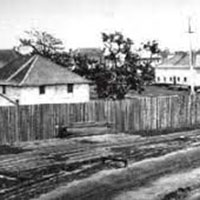
Fort Victoria is a historical site located on Vancouver Island in British Columbia, Canada. It was established in 1843 by the Hudson's Bay Company as a trading post, and was named after Queen Victoria of the United Kingdom. The fort was an important center for the fur trade and other commercial activities, and played a key role in the colonization and development of the island.
Fort Victoria, originally established in 1843, was located at the southern tip of Vancouver Island. The fort was built by the Hudson's Bay Company (HBC) as a trading post and was named after Queen Victoria of the United Kingdom. The fort was an important center for the fur trade and other commercial activities, and played a key role in the colonization and development of the island. The fort served as the capital of the colony of Vancouver Island and later the colony of British Columbia and played an important role in the administration of the colony and the development of the island and mainland.
American expansion and increasing American presence in the Pacific Northwest region was a concern for the HBC and the British government, as it threatened to disrupt the HBC's trade and the British claim to the region. The HBC's presence on Vancouver Island, as well as the establishment of a British colony on the island in 1849, helped to reinforce British sovereignty in the region and counter American expansion.
There were several challenges in establishing Fort Victoria on Vancouver Island in 1843. Some of the main challenges were:
Logistics: Building a fort and establishing a trading post in an isolated location like Vancouver Island required a significant investment of resources and manpower. The HBC had to transport materials and supplies from their other posts and settlements, which was a difficult and costly endeavor.
Climate: The climate of Vancouver Island, with its heavy rainfalls, strong winds and cold temperatures, made the construction of the fort and the maintenance of the buildings and equipment a difficult task.
Unfamiliar territory: The HBC employees and settlers who established the fort were not familiar with the terrain and the local conditions of Vancouver Island, and had to learn quickly how to adapt to the new environment.
Hostile Indigenous populations: Many of the Indigenous peoples of Vancouver Island were hostile to the HBC and the settlers, and resisted their presence on the island. This made it difficult for the HBC to establish a good relationship with the local Indigenous populations, which was essential for their fur trade operations.
Competition: The HBC was not the only company interested in trading in the region, and they faced competition from other companies, such as the American Fur Company and the Russian-American Company.
Government relations: The HBC had to navigate complex political relationships with the British government, which controlled the colony of Vancouver Island, as well as the governments of other countries that had interests in the region.
Fort Victoria on Vancouver Island was built by employees and settlers of the Hudson's Bay Company (HBC), which established the fort in 1843 as a trading post. The construction of the fort was likely led by the Governor and Chief Factor of the HBC in British Columbia, James Douglas, who was responsible for the overall management of the company's operations in the region.
The construction of the fort would have required a significant amount of labor and skill, including carpenters, masons, and other tradespeople, to build the fort structures, as well as laborers to clear the land, move materials and supplies, and perform other tasks. The labor force would have included HBC employees, as well as Indigenous people and other settlers who had contracted with the HBC to work on the construction of the fort.
It's worth noting that the HBC relied heavily on the labor of Indigenous peoples, both in the construction of the fort and in the company's overall operations. They were recruited as trappers, hunters, and laborers, and played a crucial role in the HBC's fur trade activities.
The main structure of the fort would have been a large, fortified trading post, which would have been built using local materials such as wood and stone. It would have been surrounded by a stockade or palisade, which was a wooden fence or wall that served as a barrier to protect the fort from attack. Inside the stockade, there would have been a number of different buildings, including:
A large, multi-purpose building that served as the main trading area and the residence of the governor and chief factor of the HBC.
Stores and warehouses for storing goods, supplies, and equipment.
Living quarters for the HBC employees and settlers who worked at the fort.
Workshops, such as a blacksmith shop, for maintaining and repairing equipment.
A hospital, in case of any illnesses or injuries.
A chapel, for religious services.
A school, to educate the children of the HBC employees and settlers.
The fort would have also had a garden area and orchard for growing fruits and vegetables, as well as a pasture for keeping livestock, such as cattle and pigs. Additionally, the fort would have had a number of outbuilds.
The new fort was named Fort Victoria, and became the main hub for the HBC's operations in the region. The fort was built to protect the HBC's interests in the area and also served as a center for trade, particularly in furs. This relocation marked a significant milestone in the history of Vancouver Island and the development of British Columbia as a whole.
The fort served as the capital of the colony of Vancouver Island and later the colony of British Columbia and played an important role in the administration of the colony and the development of the island and mainland.
Timeline
Life at Fort Victoria, established in 1843 by the Hudson's Bay Company (HBC) on Vancouver Island, would have varied depending on an individual's role and position within the fort community. However, in general, the day-to-day life of the people who lived at the fort would have been shaped by the fort's purpose as a trading post and center of commercial and administrative activities.
For HBC employees, such as the Governor and Chief Factor, clerks, and traders, life at the fort would have been focused on the company's business operations. They would have been involved in activities such as trading with Indigenous peoples and other traders, managing the movement of goods and supplies, and maintaining the fort's buildings and equipment. They would also have been involved in the administration of the colony of Vancouver Island and the surrounding region.
For settlers and other non-HBC employees, life would have been centered around their homes and families, and may have included farming, fishing and hunting. The settlers would have had to adapt to the harsh weather and unfamiliar terrain of Vancouver Island.
For Indigenous people who worked or traded with the HBC, their daily lives would have been heavily impacted by the presence of the fort and the fur trade. They would have been involved in hunting and trapping, and would have traveled to the fort to trade their furs for goods and supplies. They would have also been employed by the HBC as trappers, hunters, and laborers, and would have been heavily dependent on the fort for their livelihoods.
Overall, life at Fort Victoria would have been challenging, with harsh weather conditions, limited resources, and a sense of isolation from the rest of the world. However, the fort played a vital role in the development of the region and provided a sense of community and stability for the people who lived and worked there.
British Columbiahistory.ca is a visitor supported web site. If you would like to submit an article or opinion, please visit our blog at www.blog.British Columbiahistory.ca.
Reference: Article by (Staff Historian), 2023
Tel: 1 604 833-9488
Email: info@canadahistorysociety.ca

All content and images are protected by copyright to Access History