
History-Periods
Past eras

From pre-history to today
Choose your period

Pre history - Present
explore the different eras
Past eras
Choose your period
explore the different eras
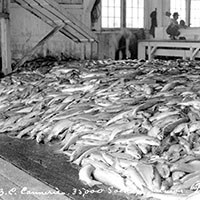
The commercial salmon industry in British Columbia, Canada began in the late 1800s with the development of canning technology, which allowed for the preservation of salmon for long periods of time. This made it possible to export the fish to markets around the world, which led to the growth of the industry in British Columbia.
The first cannery in British Columbia was established in 1871 in Steveston, a small fishing village located on the south arm of the Fraser River. The cannery was named the British Columbia Packers Association and was the first of many canneries that would open in the area in the following years, as the industry grew.
The British Columbia Packers Association (BCPA) was one of the first commercial salmon canneries in British Columbia, Canada, established in 1871 in Steveston, a small fishing village on the south arm of the Fraser River. This cannery was responsible for the development of the commercial salmon industry in British Columbia, which would go on to become a major economic force in the region. The BCPA was a company that was involved in the fish processing industry, mainly focused on salmon, and was one of the main companies that operated in the industry during the late 1800s and early 1900s.
Salmon became a large industry in British Columbia, Canada for several reasons. First, the development of canning technology in the late 1800s made it possible to preserve the fish for long periods of time, allowing for export to markets around the world. Additionally, the Fraser River, which runs through British Columbia, is one of the most productive salmon-bearing rivers in the world, providing a steady supply of fish for the industry. The abundance of salmon in the waters off the coast of British Columbia, combined with the development of the canning industry, led to the growth of the commercial salmon fishing industry in the region.
Fishing for salmon in British Columbia is done primarily by using gillnets and purse seines. Gillnets are large walls of netting that hang vertically in the water and entangle fish as they swim through. Purse seines, on the other hand, are large nets that encircle an entire school of fish, which are then drawn up and harvested. Both of these methods are used for catching salmon in the ocean, near the coast or in the estuaries and rivers.
The fishing season for salmon in British Columbia typically runs from late spring to early fall, with different species of salmon returning to spawn at different times of the year. Once caught, the fish are transported to processing plants where they are cleaned, packaged and shipped to markets around the world.
The commercial salmon fishing industry in British Columbia is regulated by the Department of Fisheries and Oceans (DFO) to ensure that the fish populations are sustained and to prevent overfishing. Quotas and limits are set for the amount of fish that can be caught each season to ensure that the populations are not depleted. The industry also has to follow strict regulations to protect the environment during the fishing process, to avoid damage to the habitat or the bycatch of other species.
In the late 1800s, the main canneries for salmon in British Columbia, Canada were located in Steveston, a small fishing village on the south arm of the Fraser River. The first cannery, the British Columbia Packers Association (BCPA), was established in 1871 and was the first of many canneries that would open in the area in the following years as the industry grew. Other major canneries that operated in Steveston during this time included the British Columbia Canners, the Canadian Fishing and Cold Storage Company, and the Fraser River Packers.
Fishing for salmon in the late 1800s was primarily done using gillnets and seines. Gillnets are large walls of netting that hang vertically in the water and entangle fish as they swim through. Seines, on the other hand, are large nets that are cast around a school of fish and then drawn up and harvested. These methods were used to catch salmon in the ocean, near the coast or in the estuaries and rivers.
During this time, the fishing season for salmon in British Columbia typically ran from late spring to early fall, with different species of salmon returning to spawn at different times of the year. Once caught, the fish were transported to the canneries for processing and preservation. The industry was expanding rapidly, and The innovation of canning salmon had a significant impact on the industry because it made it possible to preserve the fish for long periods of time, allowing for export to markets around the world. Prior to the development of canning, fresh salmon could only be consumed locally, limiting the market and the potential for economic growth.
Canning technology allowed for the preservation of salmon by heating the fish to a high temperature, which kills bacteria and stops the natural spoilage process. This made it possible to package the fish in cans, which could be sealed and stored for extended periods of time without spoiling. This made it possible to ship the fish to far-away markets, increasing the potential customer base and allowing for greater economic growth.
The development of canning technology also led to the growth of the commercial fishing industry in British Columbia. With the ability to export salmon, the demand for fish increased, leading to the expansion of the fishing fleet and the creation of new canneries. This in turn led to the creation of jobs and economic growth in the region, as well as the development of new technologies and techniques for fishing and canning. The canning innovation was a key factor that allowed the salmon industry to grow and expand beyond the local level, into a large-scale commercial industry.the canneries were the main employers of the local communities, providing jobs and economic opportunities.
Salmon fishing has been and continues to be an important part of the British Columbia (BC) economy. Historically, it was one of the main drivers of economic growth in the region, providing jobs and income for thousands of people. The industry has played a significant role in the development of the coastal communities of British Columbia, and continues to be an important part of the regional economy.
The commercial salmon fishing industry in BC is the largest in Canada and one of the largest in the world. In recent years, the industry has generated billions of dollars in revenue and has provided thousands of jobs for people in the region. The industry includes not only fishing but also processing, packaging, and exporting of the fish.
In addition to providing economic benefits, the salmon fishing industry also supports other industries such as boat building, net making, and ice production. Furthermore, the industry also contributes to the conservation of the fish population and the marine ecosystem.
The BC salmon industry is regulated by the federal government to ensure the sustainability of fish populations and to prevent overfishing. The industry also has to follow strict regulations to protect the environment during the fishing process, to avoid damage to the habitat or the bycatch of other species.
Overall, the salmon fishing industry is an important part of the BC economy, providing jobs, income, and supporting other industries while also being a sustainable industry in the region.
The salmon canning industry in British Columbia, Canada traditionally employed a diverse workforce, comprising of different ethnic groups and background. The early canneries were operated by European immigrants, primarily from Scotland, England, and Ireland, who brought with them the knowledge and skills to establish and operate the canneries.
However, as the industry grew, it began to attract a diverse group of workers from all over the world, including Chinese, Japanese, First Nations, and South Asian immigrants. Many of these workers were drawn to the industry by the promise of steady employment and wages that were higher than what they could earn in their home countries.
Chinese immigrants were particularly significant in the early days of the industry, as they had experience in fishing and in the canning industry in their home country. Many Chinese immigrants worked in the canneries as fish cleaners, packers, and canners, and they also played a significant role in the development of the fishing fleet, building and operating their own boats.
Japanese immigrants also played a key role in the industry, and they were particularly skilled at gillnetting and seining, which were the main methods used to catch salmon. Many Japanese immigrants worked as fishermen and fish processors, and they also established their own canneries and fishing companies.
First Nations people were also employed in the canning industry, primarily as fish cleaners and canners, and they played an important role in the industry's development.
Overall, the salmon canning industry in British Columbia has traditionally been a melting pot of different cultures and ethnicities, with a diverse workforce that has played a significant role in the industry's growth and development.
Timeline
Salmon has been an important food source and cultural symbol for the Indigenous peoples of British Columbia for thousands of years. Many Indigenous communities in the region have a deep spiritual and cultural connection to salmon, which is often referred to as "the lifeblood of the land."
Salmon has been a central part of the traditional diet and economy of many Indigenous communities in British Columbia. The fish were caught using traditional methods such as dip netting, spearing, and weirs, and were a key source of protein and nutrition. Many Indigenous communities also used salmon for trade and commerce, both with other Indigenous groups and with European settlers.
In addition to providing a food source, salmon also played a central role in the spiritual and cultural practices of many Indigenous communities. Many Indigenous peoples believe that salmon is a gift from the Creator, and that the fish have a special relationship with the land and the people. Salmon is often associated with the cycle of life, with the fish returning to the rivers to spawn and die, much like the cycle of human life. Many Indigenous communities also have traditional stories and legends that tell of the importance of salmon in their culture.
Today, many Indigenous communities in British Columbia continue to rely on salmon as a food source, and the fish continue to be an important part of their culture. The Indigenous peoples are also partners in the management of the fisheries, with some of them having agreements with the government to co-manage certain salmon stocks.
Overall, salmon has been an essential and important part of the tradition and culture of Indigenous peoples of British Columbia, providing a food source and cultural significance that has been passed down through generations.
British Columbiahistory.ca is a visitor supported web site. If you would like to submit an article or opinion, please visit our blog at www.blog.British Columbiahistory.ca.
Reference: Article by (Staff Historian), 2023
Tel: 1 604 833-9488
Email: info@canadahistorysociety.ca

All content and images are protected by copyright to Access History