
History-Periods
Past eras

From pre-history to today
Choose your period

Pre history - Present
explore the different eras
Past eras
Choose your period
explore the different eras
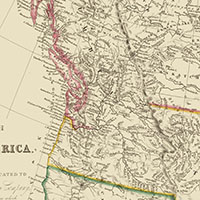
The dispute over the Oregon Country and the British colony of Vancouver Island was one of several boundary disputes between Great Britain and the United States in the early 19th century. The Oregon Country was a disputed territory that included present-day Oregon, Washington, and parts of Idaho and Montana.
The British colony of Vancouver Island was located just off the coast of the Oregon Country. Both Great Britain and the United States claimed sovereignty over the area.
The British claim to the Oregon Country and Vancouver Island was based on exploration and trade in the region by British navigators and fur traders dating back to the late 18th century. The Hudson's Bay Company, a British fur trading company, had established trading posts in the region and had a significant presence in the area. The British also claimed that the region was part of their colony of Canada, and that they had the right to control the territory based on the principle of "first discovery." Additionally, the British argued that the region was needed to provide a buffer zone between their colony in Canada and the expanding United States.
The United States claimed the Oregon territory based on the principle of "joint occupancy," which stated that both the United States and Great Britain had the right to use and settle the land until a formal boundary agreement could be reached. The US believed that the 49th parallel should be the boundary line, while the British argued for the line of the Columbia River.
The United States took several actions to claim the Oregon territory during the boundary dispute with Great Britain. Some of these actions include:
Exploration: The US sent explorers, such as Lewis and Clark, to map and document the region, which helped to establish American presence in the area.
Settlement: The US encouraged American settlers to move into the region, which helped to establish American communities and increase American influence in the territory.
Diplomacy: The US engaged in diplomatic negotiations with Great Britain to try to reach a boundary agreement. The US argued that the 49th parallel should be the boundary line, while the British argued for the line of the Columbia River.
Military presence: The US maintained a military presence in the region to protect American interests and assert American sovereignty.
Economic Interests: The US also pushed for its economic interests in the region, especially the access to sea ports and control over fur trade.
During the boundary dispute with the United States over the Oregon territory, the British took several actions to secure the region for themselves. Some of these actions include:
Exploration: The British also sent explorers to map and document the region, in an effort to establish British presence in the area.
Settlement: The British encouraged British settlers to move into the region, which helped to establish British communities and increase British influence in the territory.
Diplomacy: The British engaged in diplomatic negotiations with the United States to try to reach a boundary agreement. The British argued that the line of the Columbia River should be the boundary, while the United States argued for the 49th parallel.
Military presence: The British maintained a military presence in the region to protect British interests and assert British sovereignty.
Economic Interests: The British also pushed for its economic interests in the region, especially in the fur trade and control of sea ports.
Eventually, the two sides reached a compromise, with the 49th parallel being established as the boundary between the US and British territories in the Oregon Country in the 1846 Oregon Treaty.
and the dispute was not resolved until the signing of the Treaty of Washington in 1846. The treaty established the 49th parallel as the border between the two countries, with the British retaining control of Vancouver Island and the United States gaining control of the Oregon Country.
Timeline
The feeling of the people in the Oregon territory during the boundary dispute between the United States and Great Britain was mixed. Some American settlers in the region were fiercely nationalist and advocated for American sovereignty over the territory. They formed groups such as the "Oregon Pioneer Association" to advocate for American interests. They also formed a provisional government and made laws to govern themselves.
On the other hand, many British settlers in the region were content to live under British rule and did not feel strongly about the dispute. Some also had mixed feelings because of their cultural and familial ties to both sides.
Indigenous peoples in the region were also affected by the dispute. They were displaced by the influx of settlers, and their traditional way of life was disrupted by the presence of outsiders. Some indigenous groups formed alliances with the Americans or the British, while others resisted the presence of both.
British Columbiahistory.ca is a visitor supported web site. If you would like to submit an article or opinion, please visit our blog at www.blog.British Columbiahistory.ca.
Reference: Article by (Staff Historian), 2023
Tel: 1 604 833-9488
Email: info@canadahistorysociety.ca

All content and images are protected by copyright to Access History