
History-Periods
Past eras

From pre-history to today
Choose your period

Pre history - Present
explore the different eras
Past eras
Choose your period
explore the different eras
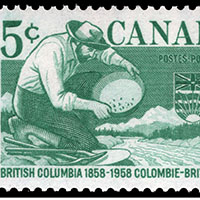
The British Columbia Gold Rush was a period of gold rush immigration to Victoria and the Fraser Canyon in British Columbia, Canada in the mid-19th century. The gold rush began in 1858, when gold was discovered on the Thompson River near present-day Kamloops, British Columbia, and on the Fraser River, a tributary of the Thompson River. This discovery was made by a group of prospectors led by James Douglas, the governor of the Colony of British Columbia.
The discovery of gold in British Columbia sparked a rush of immigration to the region, as people from all over the world flocked to the area in search of wealth. The gold rush led to the establishment of several new towns and cities in British Columbia, including Victoria, New Westminster, and Yale. It also had a significant impact on the development of the province, as the influx of people and capital helped to stimulate the economy and bring about significant changes to the social and political landscape.
The British Columbia gold rush began in 1858, when gold was discovered in the Fraser River, which flows through the southern region of the Canadian province of British Columbia. The discovery of gold was made by a group of prospectors from California, who were traveling north in search of new gold fields after the California gold rush had begun to wane.
News of the discovery quickly spread, and thousands of people from all over the world, including prospectors, miners, and entrepreneurs, began to flood into the region in search of gold. This influx of people led to the rapid development of towns and communities, such as Yale, Lillooet, and Clinton, along the Fraser River and its tributaries.
The discovery of gold in the Cariboo region of British Columbia in 1861, led to a second wave of the gold rush and established towns such as Barkerville. This gold rush was considered to be one of the largest and most significant gold rushes in the history of North America, drawing prospectors and miners from all over the world to the region. The Cariboo gold rush lasted until 1885 and it was one of the main factors that led to the formation of British Columbia as a province in 1871.
During the British Columbia gold rush, there were several routes that miners used to travel to the gold rush areas.
The Fraser River route: This was the most popular route for miners during the early years of the gold rush, as it was the easiest and most direct way to reach the goldfields. Many miners came from California via the Oregon Trail and then took the steamer ships from Portland, Oregon to Victoria, British Columbia. They then traveled up the Fraser River by boat to reach the goldfields.
The Overland route: This route was used by miners who came from the east, such as from the United States and Canada. They typically traveled by foot, horse, or wagon, along the Oregon Trail to the goldfields.
The Cariboo Wagon Road: This route was used by miners who wanted to reach the goldfields in the Cariboo region of British Columbia. The road was built in the early 1860s to connect the towns of Lillooet and Barkerville. Miners traveled by foot, horse, or wagon along the road, which was treacherous and difficult to navigate due to the rugged terrain.
Miners came from all over the world to participate in the gold rush, including the United States, Canada, Europe, China, and other parts of Asia. Many of the miners were from California, who had participated in the California Gold Rush and were looking for new opportunities. Others were from the Eastern United States, Canada, Europe and China.
The gold rush ultimately came to an end in the late 1860s, as the easily accessible gold deposits were depleted and the cost of mining increased. However, the legacy of the British Columbia Gold Rush lives on in the many historic sites and landmarks that can be found throughout the province.
Timeline
The gold rush had a significant impact on the people of the colony of Vancouver Island and the mainland.
For the colony of Vancouver Island, the gold rush brought an influx of people and money to the region. Victoria, the capital of the colony, became an important supply and transportation hub for the goldfields, as miners and prospectors passed through the city on their way to the goldfields. This led to a boom in the city's economy, with many new businesses and services being established to cater to the needs of the miners.
However, the colony also faced challenges as a result of the gold rush. One of the main challenges was the influx of people, which put a strain on the colony's resources, such as housing and food. Additionally, the colony's government struggled to keep up with the demands of the rapidly growing population.
On the mainland, the gold rush led to the rapid development of towns and communities along the Fraser River and its tributaries, as well as the Cariboo region. The population of the mainland increased dramatically, as prospectors and miners flooded into the region in search of gold. This led to a boom in the economy, with many new businesses and services being established to cater to the needs of the miners.
However, the gold rush also brought challenges for the Indigenous peoples of the region. The influx of miners and prospectors led to the displacement of many Indigenous communities, as well as the destruction of their traditional hunting and fishing grounds. Many Indigenous peoples also faced discrimination and violence at the hands of the newcomers.
Overall, the gold rush had a significant impact on the people of the colony of Vancouver Island and the mainland, both in terms of economic and social effects.
British Columbiahistory.ca is a visitor supported web site. If you would like to submit an article or opinion, please visit our blog at www.blog.British Columbiahistory.ca.
Reference: Article by (Staff Historian), 2023
Tel: 1 604 833-9488
Email: info@canadahistorysociety.ca

All content and images are protected by copyright to Access History