
History-Periods
Past eras

From pre-history to today
Choose your period

Pre history - Present
explore the different eras
Past eras
Choose your period
explore the different eras
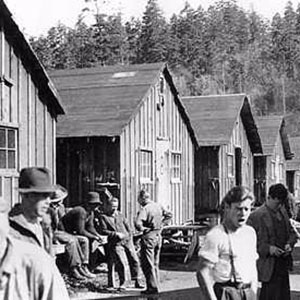
During the Great Depression, the government of British Columbia established relief camps as a way to provide employment and support for unemployed men. The camps were set up in remote areas of the province, and men were given the opportunity to work on public projects such as road building and forestry in exchange for room and board.
However, the conditions in the relief camps were often harsh and inadequate. The men were often housed in overcrowded and poorly maintained barracks, and were provided with insufficient food and medical care. Additionally, the work was physically demanding and dangerous, and accidents and injuries were common.
The relief camps also faced criticism for their poor treatment of Indigenous people and other marginalized groups. Men were often forced to leave their families and communities to work in the camps, and faced discrimination and abuse. Chinese and Japanese men were also restricted from working in the camps, as well as other minorities.
Furthermore, the camps were seen as a way for the government to control and suppress political dissent among the unemployed, by confining men to remote locations and limiting their freedom of movement.
Overall, while the relief camps were intended to provide support for unemployed men during the Great Depression, they often fell short of this goal and were plagued by issues such as poor living conditions, inadequate support and discrimination.
During the Great Depression, relief camps were established in remote areas of British Columbia. They were located in various parts of the province, including the Interior, the Kootenays, and the coast. The camps were typically situated in isolated regions with limited access to services and amenities.
The number of men in the relief camps varied over time, as the camps were established and closed as needed. At the peak of the program, there were around 3,000 men in the relief camps. However, throughout the duration of the program, an estimate of 20,000 to 25,000 men passed through the camps.
It's worth noting that the relief camp program was not limited to British Columbia and was a part of a larger national program, the "Department of Relief and Unemployment" created in 1930 by the Canadian government which set up relief camps across the country.
Timeline
The relief camps established in British Columbia during the Great Depression had a significant social impact on the men who participated in the program.
On one hand, the relief camps provided a source of employment and support for unemployed men during a time of great economic hardship. The men were able to earn a small wage and had access to room and board, which helped them to meet their basic needs. Additionally, some men were able to acquire new skills and experience while working on public projects.
On the other hand, the conditions in the relief camps were often harsh and inadequate. The men were housed in overcrowded and poorly maintained barracks, and were provided with insufficient food and medical care. The work was physically demanding and dangerous, and accidents and injuries were common. This led to poor physical and mental health among the men.
Lastly, the camps were seen as a way for the government to control and suppress political dissent among the unemployed, by confining men to remote locations and limiting their freedom of movement.
Overall, the relief camps had a complex social impact on the men who participated in the program. While they provided a source of employment and support, the harsh conditions and discrimination experienced by many men had a negative impact on their physical and mental well-being and also perpetuated the marginalization of certain groups.
British Columbiahistory.ca is a visitor supported web site. If you would like to submit an article or opinion, please visit our blog at www.blog.British Columbiahistory.ca.
Reference: Article by (Staff Historian), 2023
Tel: 1 604 833-9488
Email: info@canadahistorysociety.ca

All content and images are protected by copyright to Access History