
History-Periods
Past eras

From pre-history to today
Choose your period

Pre history - Present
explore the different eras
Past eras
Choose your period
explore the different eras
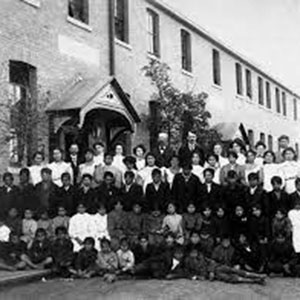
Duncan Scott was the Indian Affairs Superintendent for Canada during the late 19th and early 20th century. He implemented a policy of compulsory attendance for Indigenous children at government-funded residential schools. The goal of this policy was to assimilate Indigenous children into European-Canadian culture and to "civilize" them. The policy was widely criticized for its negative impact on Indigenous families and communities, as well as for the abuse and neglect that took place at the residential schools.
One of Scott's most notable policies was the forced removal of Indigenous children from their families and communities and placing them in residential schools. These schools were run by religious organizations and aimed to assimilate Indigenous children into white, European-Canadian culture by teaching them the English language, Christianity and the customs and values of European society. The schools were infamous for the physical, emotional, and sexual abuse of Indigenous children, and the separation from their families and communities caused immense trauma and loss of culture.
Scott's policies also included the restriction of Indigenous peoples' freedom of movement and their ability to practice their own culture and traditions, as well as the imposition of a pass system, which required Indigenous people to obtain permission to leave their reserves.
These policies were part of the broader government policy of cultural genocide of Indigenous people in Canada, which resulted in the loss of language, culture, and traditions, and had a devastating impact on Indigenous communities.
It's important to note that many Indigenous people, organizations, and activists have been advocating for justice and reparations for the harm caused by these policies. The Truth and Reconciliation Commission of Canada has also brought attention to these issues and has made several recommendations for addressing the ongoing impacts of residential schools and other government policies.
Timeline
It's important to note that the residential school system is a dark chapter in Canada's history, where Indigenous children were forcibly taken away from their families and communities, and subjected to physical, emotional, and sexual abuse. The TRC report revealed that thousands of Indigenous children died in residential schools, due to disease and neglect.
British Columbiahistory.ca is a visitor supported web site. If you would like to submit an article or opinion, please visit our blog at www.blog.British Columbiahistory.ca.
Reference: Article by (Staff Historian), 2023
Tel: 1 604 833-9488
Email: info@canadahistorysociety.ca

All content and images are protected by copyright to Access History